Pigmentation
At Kriniko Medical Aesthetics, we understand that pigmentation concerns can affect not only the appearance of the skin, but also confidence and overall skin health. Using advanced diagnostic technology and evidence-based treatment protocols, we provide personalised solutions designed to safely and effectively improve uneven skin tone and discolouration.
What is Pigmentation?
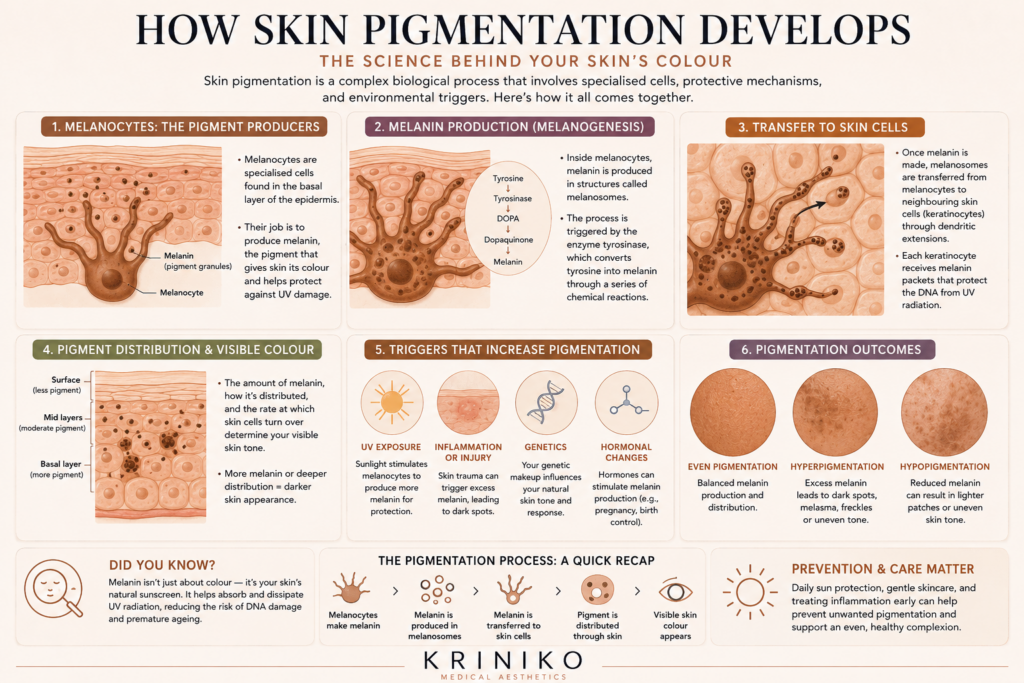
Pigmentation refers to the natural colouring of the skin caused by a pigment called melanin, which is produced by specialised cells known as melanocytes.
Melanin plays an essential protective role by shielding the skin from ultraviolet (UV) radiation. However, when melanin production becomes excessive or uneven, areas of the skin can darken, creating visible pigmentation concerns known as hyperpigmentation.
Pigmentation can affect all skin tones and may vary in severity, depth, and underlying cause.
How Pigmentation Develops
Pigmentation develops when melanocytes become overactive due to internal or external triggers.
Common Causes of Pigmentation Include:
Sun Exposure
UV radiation is the leading cause of pigmentation. Repeated exposure stimulates excess melanin production, resulting in sun spots and uneven tone.
Hormonal Changes
Hormonal fluctuations associated with:
- Pregnancy
- Contraceptive pills
- Menopause
- Hormone replacement therapy
can contribute to conditions such as melasma.
Inflammation & Skin Trauma
Conditions such as:
- Acne
- Eczema
- Rosacea
- Aggressive treatments
- Picking or scratching the skin
may trigger post-inflammatory pigmentation.
Ageing
Over time, cumulative sun exposure and reduced skin repair mechanisms contribute to visible pigmentation changes.
Genetics
Some individuals are genetically predisposed to pigmentation disorders.
The Different Types of Pigmentation
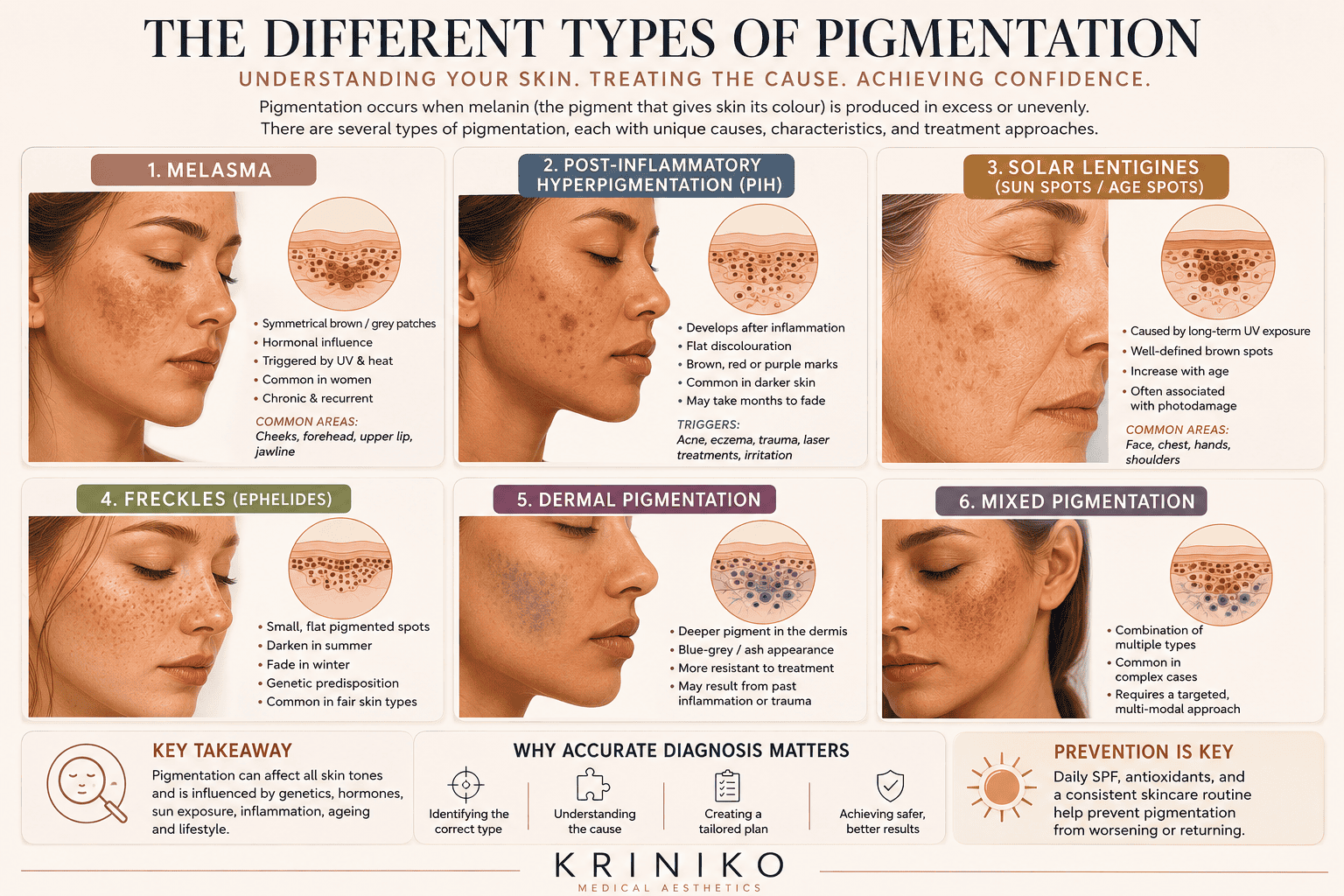
Melasma
Melasma presents as symmetrical brown or grey patches, usually affecting:
- Cheeks
- Forehead
- Upper lip
- Jawline
Common Characteristics:
- Hormonal influence
- Triggered by UV exposure and heat
- Chronic and recurrent
- More common in women
At Kriniko Medical Aesthetics, melasma is carefully assessed to avoid overstimulation and worsening of pigmentation.
Post-Inflammatory Hyperpigmentation (PIH)
PIH develops following inflammation or skin injury.
Common Triggers:
- Acne
- Laser treatments
- Chemical irritation
- Eczema
- Trauma to the skin
Appearance:
- Brown, red, or purple marks
- Flat discolouration
- More common in darker skin types
Solar Lentigines (Sun Spots / Age Spots)
These are benign pigmented lesions caused by long-term UV exposure.
Common Areas:
- Face
- Chest
- Hands
- Shoulders
Features:
- Clearly defined brown spots
- Increase with age
- Often associated with photodamage
Freckles (Ephelides)
Small pigmented spots linked to genetics and sun exposure.
Characteristics:
- Darken in summer
- Fade in winter
- Common in fair skin types
Dermal Pigmentation
Deeper pigmentation located within the dermis.
Features:
- Blue-grey appearance
- More challenging to treat
- Often resistant to superficial treatments
Advanced Pigmentation Analysis with OBSERV®
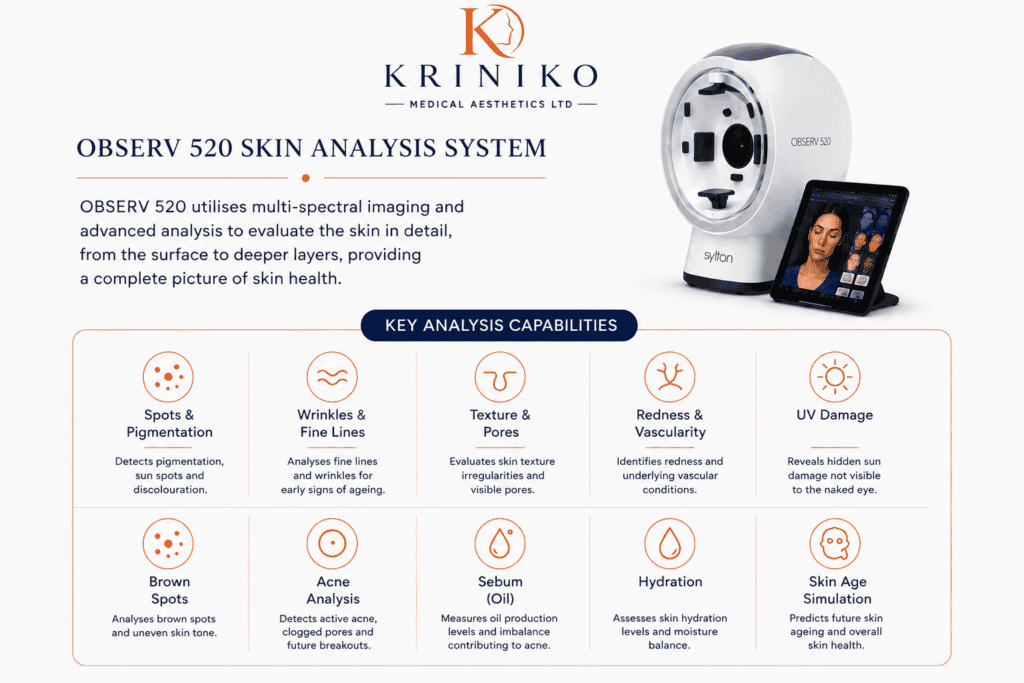
At Kriniko Medical Aesthetics, we utilise the advanced OBSERV® Facial Analysis System to accurately assess pigmentation and create tailored treatment plans.
The OBSERV system allows us to visualise:
- Surface pigmentation
- Hidden UV damage
- Vascular involvement
- Skin inflammation
- Pigment depth
This enables precise treatment selection and realistic outcome planning.
How OBSERV® Identifies Pigmentation
Daylight Mode
Evaluates visible:
- Uneven tone
- Surface pigmentation
- Skin texture
Parallel Polarised Mode
Highlights:
- Epidermal pigmentation
- Early sun damage
- Superficial irregularities
Cross Polarised Mode
Visualises deeper skin structures including:
- Dermal pigmentation
- Vascular activity
- Inflammatory processes
This is particularly important when assessing melasma.
UV Mode
Reveals:
- Hidden pigmentation
- Underlying sun damage
- Future pigmentation concerns before they become visible
This allows patients to better understand the extent of UV-related skin damage and supports preventative treatment planning.
Pigmentation Treatments at Kriniko Medical Aesthetics
At Kriniko Medical Aesthetics, we take a comprehensive and medically led approach to pigmentation management.
Treatment plans are tailored based on:
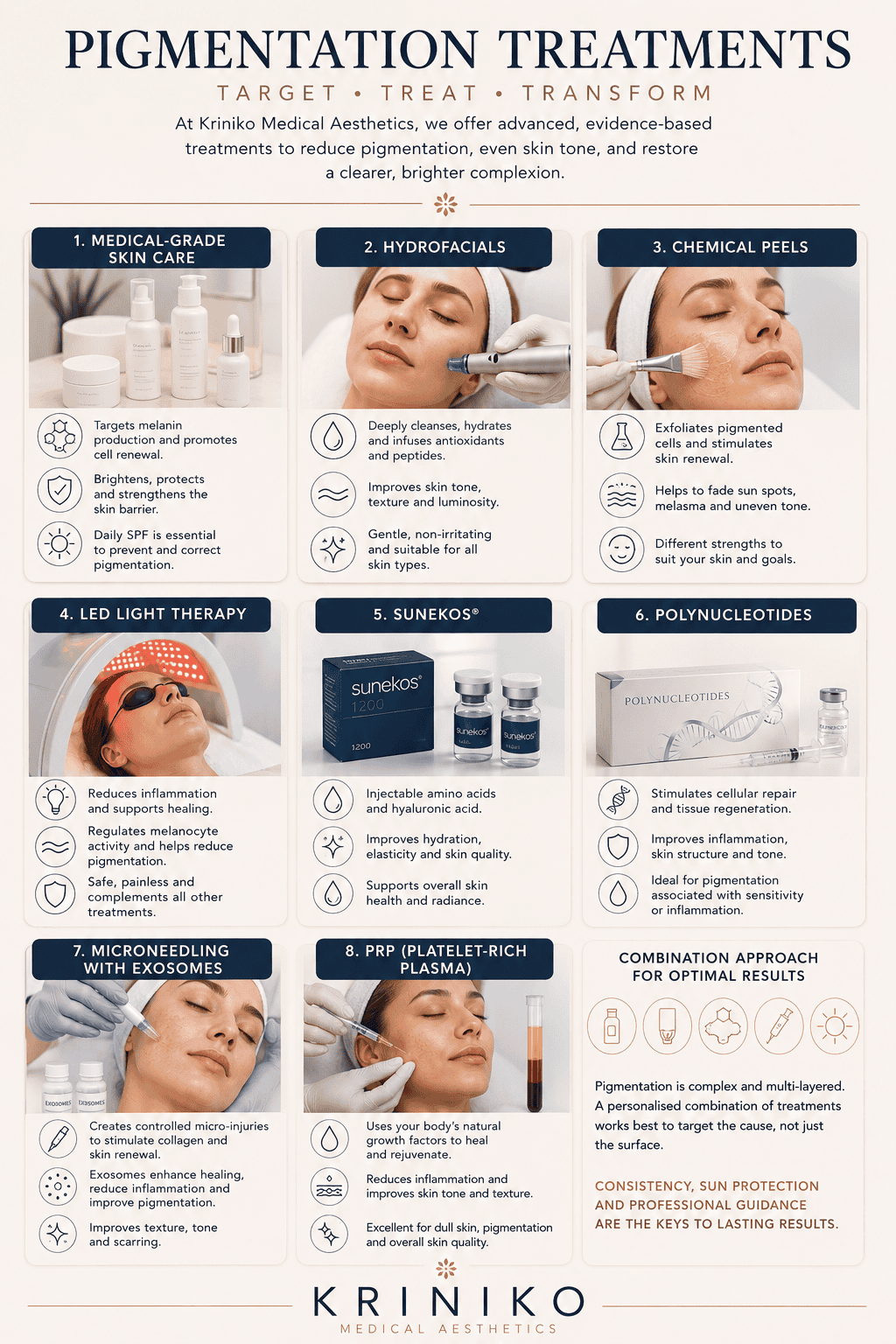
Medical-Grade Skincare
Professional skincare forms the foundation of every successful pigmentation treatment programme.
Active Ingredients We May Recommend:
Tyrosinase Inhibitors
Help reduce excess melanin production:
- Kojic acid
- Arbutin
- Tranexamic acid
- Azelaic acid
- Hydroquinone (where clinically appropriate)
Retinoids
Promote cellular renewal and improve skin turnover.
Antioxidants
Protect against free radical damage:
- Vitamin C
- Niacinamide
- Ferulic acid
Exfoliating Acids
Encourage brighter, smoother skin:
- Glycolic acid
- Mandelic acid
- Lactic acid
Daily SPF Protection
Broad-spectrum SPF 50 is essential to prevent recurrence and maintain treatment results.
Expected Improvement:
60–80% improvement in mild to moderate pigmentation with consistent use.
LED Light Therapy
LED therapy helps calm inflammation and support skin healing.
Common Wavelengths Used:
- Red LED (633nm)
- Near Infrared (830nm)
Benefits:
- Reduces inflammation
- Supports healing
- Improves recovery after procedures
- Helps regulate melanocyte activity
Particularly Effective For:
- Melasma
- Sensitive skin
- Post-inflammatory pigmentation
Expected Improvement:
Approximately 30–50% improvement when combined with other treatments.
Chemical Peels
Chemical peels exfoliate pigmented skin cells and stimulate healthier skin renewal.
Peels Commonly Used:
- Mandelic acid peels
- Glycolic acid peels
- Lactic acid peels
- TCA peels
- Jessner peels
Benefits:
- Brightens complexion
- Improves uneven tone
- Reduces superficial pigmentation
Important Considerations:
At Kriniko Medical Aesthetics, peel selection is carefully tailored to minimise the risk of rebound pigmentation.
Expected Improvement:
50–75% improvement in superficial pigmentation over a course of treatments.
Microneedling
Microneedling stimulates collagen production and controlled skin regeneration.
Benefits:
- Improves post-inflammatory pigmentation
- Enhances product absorption
- Encourages healthier skin turnover
Often Combined With:
- PRP
- Tranexamic acid
- Mesotherapy
Expected Improvement:
Approximately 50–70% improvement depending on severity.
Growth Factor Treatments
This uses your own growth factors to stimulate healing and regeneration.
Benefits:
- Reduces inflammation
- Improves skin quality
- Supports collagen production
- Enhances healing following microneedling
Best For:
- Ageing skin
- Post-inflammatory pigmentation
- Dull or damaged skin
Expected Improvement:
Approximately 40–60% improvement when used as part of combination therapy.
Polynucleotides
Polynucleotides are regenerative injectable treatments that support cellular repair and reduce inflammation.
Benefits:
- Tissue regeneration
- Skin barrier repair
- Improved hydration
- Reduction in inflammatory activity
Role in Pigmentation:
Particularly useful where inflammation contributes to pigmentation disorders.
Expected Improvement:
Approximately 30–50% improvement in overall skin quality and pigmentation appearance.
Sunekos®
Sunekos combines amino acids and hyaluronic acid to stimulate fibroblast activity and improve skin function.
Benefits:
- Deep hydration
- Skin rejuvenation
- Improved elasticity
- Reduced inflammation
Best For:
- Pigmentation associated with ageing
- Dull, dehydrated skin
Expected Improvement:
Approximately 30–50% improvement when incorporated into a wider treatment plan.
Mesotherapy
Mesotherapy delivers active ingredients directly into the skin through microinjections.
Ingredients May Include:
- Tranexamic acid
- Vitamins
- Peptides
- Hyaluronic acid
- Glutathione
Benefits:
- Brightens skin
- Improves hydration
- Reduces melanocyte overactivity
Expected Improvement:
Approximately 40–70% improvement over multiple sessions.
Why Combination Therapy Works Best
Pigmentation is rarely caused by a single factor. At Kriniko Medical Aesthetics, we often combine therapies to target:
- Melanin production
- Inflammation
- Skin barrier dysfunction
- Cellular repair
- UV damage
This approach delivers safer, more effective, and longer-lasting results.
Factors That Affect Treatment Success
Treatment outcomes depend on:
- Depth of pigmentation
- Skin type
- Hormonal influence
- UV exposure
- Treatment consistency
- Patient compliance
- Lifestyle factors
Why Pigmentation Can Return
Some pigmentation conditions — especially melasma — are chronic and prone to recurrence.
Triggers include:
- Sun exposure
- Heat
- Hormonal fluctuations
- Inflammation
- Inconsistent skincare
Long-term maintenance and sun protection are essential for sustained improvement.
Typical Treatment Timelines
| Condition | Expected Timeline |
| Mild pigmentation | 4–6 weeks |
| Moderate pigmentation | 3–6 months |
| Severe melasma | 6–12 months |
| Maintenance phase | Ongoing |
Your Pigmentation Journey at Kriniko Medical Aesthetics
At Kriniko Medical Aesthetics, every pigmentation treatment journey begins with a detailed consultation and advanced OBSERV skin analysis.
Our goal is to:
- Identify the root cause of pigmentation
- Create a personalised treatment plan
- Improve skin health safely
- Deliver natural, long-term results
We believe successful pigmentation treatment requires not only advanced procedures, but also patient education, prevention, and ongoing skin maintenance.
If you are concerned about:
- Uneven skin tone
- Melasma
- Sun damage
- Acne pigmentation
- Age spots
our experienced team at Kriniko Medical Aesthetics can help create a bespoke treatment plan tailored to your skin.